



STOP RSV
Achieving Sustainable Development Goal (SDG) 3.2 in the four years remaining to 2030 will require a roughly one-third reduction in global child deaths—from the current 5 million to 3.3 million.* Action is most urgently needed in the 60 countries which are off-track to meet the target, including 45 in Africa, as reported by UNICEF.
Further, with child deaths projected to rise by more than 200,000 in 2025 to 4.8 million, and with global health financing under pressure, urgent action is needed to scale interventions that can reduce child mortality quickly, cost-effectively, and sustainably, especially in the off-track countries.
Expanding coverage of vaccines that prevent pneumonia—the leading infectious killer of children under five—is a critical opportunity. In 2023, pneumonia caused an estimated 610,000 child deaths, with 30% occurring among newborns and 70% among children aged 1–59 months, according to the Global Burden of Disease.
Although vaccines have driven roughly 40% of the decline in child mortality since 1990, pneumonia vaccines have fallen short of their lifesaving potential due to delayed introduction and low coverage.
Of the 14 vaccines that have saved at least 154 million lives over the past 50 years, pneumonia vaccines account for just 3%, including 2.8 million lives saved by the Haemophilus influenzae type b (Hib) vaccine and 1.6 million by the pneumococcal conjugate vaccine (PCV). Yet new estimates indicate that scaling PCV and new Respiratory Syncytial Virus (RSV) vaccines to full coverage could prevent 3.4 million child deaths by 2045.
With PCV coverage at 71%, far below the IA2030 target of 90%, and no low- or middle-income countries outside Latin America introducing the RSV maternal vaccine, closing these gaps could dramatically increase the contribution of pneumonia vaccines to the child mortality reductions required for SDG achievement.
To accelerate uptake of RSV maternal vaccines, Stop RSV: Let the Science Talk! is bringing together leading scientific experts in RSV vaccination to share their views on the impact of these vaccines. Content will be distributed directly to policy makers and other decision-making audiences.
Goal
The group is guided by an overarching goal:
Increase awareness of the new RSV maternal vaccine and its impact on saving lives and reducing healthcare costs to motivate governments with large numbers of RSV hospitalizations and deaths to commit to introducing RSV vaccine by 2030.
Countries targeted will include those with more than 400,000 child RSV episodes and high coverage of four antenatal visits (ANC) among pregnant women, including:
- Egypt (698,000 RSV cases/90% ANC)
- Philippines 561,000 RSV cases/83% ANC)
- India (6.2M RSV cases/58% ANC)
- Mexico (530,000 RSV cases/94% ANC)
- South Africa (RSV cases 413,231/76% ANC)
An additional eight countries who are also members of the Maternal Immunisation Readiness Network in Africa & Asia (MIRNA) will be targeted, including Kenya, Ghana, Ethiopia, Uganda, Pakistan, Bangladesh. Burkina Faso, and Nigeria. Close partnership with MIRNA will ensure these efforts are complementary.
Countries in Latin America which have already introduced the RSV maternal vaccine, including Argentina, Brazil, Peru, Colombia, and Mexico, will inform uptake in the target countries.
*In 2030 there will be an estimated 131,000,000 live births according to UN World Population Prospects. Achieving a child mortality rate of 25 child deaths for every 1,000 babies born in 2030 translates into 3.3 million child deaths in that year.
Members
Spotlight

We, the undersigned vaccine scientists, pediatricians, infectious disease experts, maternal health specialists, economists, and public health leaders, are joining forces around a shared goal: to STOP RSV.
Respiratory syncytial virus (RSV) is one of the leading causes of pneumonia in infants worldwide. Every year, RSV causes an estimated 33 million lower respiratory tract infections, more than 3.6 million hospitalizations, and over 100,000 deaths among children under five years of age — with the greatest burden falling on babies in the first months of life. The overwhelming majority of these deaths occur in low- and middle-income countries (LMICs).
For decades, health systems had few tools to prevent RSV in newborns and young infants. That has now changed. The arrival of maternal RSV vaccination represents one of the most important breakthroughs in child survival and maternal immunization in a generation.
We are coming together because the evidence is now too strong to ignore.
Maternal RSV vaccination works. It saves lives. It prevents severe disease during the most vulnerable first months of infancy. And it substantially reduces the burden on hospitals and overstretched health systems, especially in LMICs where the systems are weak.
Trial data from 18 middle- and high-income countries demonstrated dramatic reductions in infant hospitalizations following the introduction of the RSV maternal vaccine. The risk of hospitalization was reduced by 68% within 3 months after birth and by 57% within 6 months after birth. Infant ICU admissions for RSV fell by 82% within 3 months and by 69% within 6 months after birth.
Read the rest of the Statement from Stop RSV: A Coalition of Vaccine Scientists and Child Health Experts here.
Published for the World Health Assembly, May 2026
Kwaku Poku Asante
Kintampo University
GHANA

Nega Assefa
Haramaya University
ETHIOPIA

Hellen Barsosio
Medical Research Institute
KENYA

Ziyaad Dangor
Witwatersrand University
SOUTH AFRICA

Hadiza Galadanci
Bayero University
NIGERIA

Michelle Groome
Witwatersrand University
SOUTH AFRICA

Rose Jalang’o
Federal Ministry of Health
KENYA

Bersabeh Kassaye
LSHTM
ETHIOPIA

Annettee Nakimuli
Makerere University
UGANDA

Imran Nisar
Aga Khan University
PAKISTAN

Daniel Noyola
University of San Luis Potosí
MEXICO

Serge Ouoba
Clinical Research Unit of Nanoro
BURKINA FASO

Ehsan Rahman
icddr,b
BANGLADES

Senjuti Saha
Child Health Research Foundation
BANGLADESH

Renato Stein
University of Rio Grande do Sul
BRAZIL

Naveen Thacker
International Pediatrics Association
INDIA
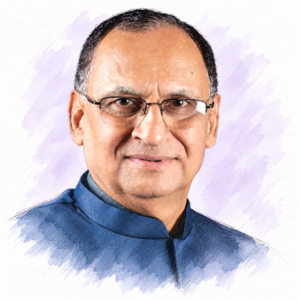
Carla Vizzotti
Universidad Nacional de San Martín
ARGENTINA

Abate Yeshidinber
St. Paul’s Hospital Medical College
ETHIOPIA

RESOURCES
Stop RSV
- Comment, Optimising pneumonia vaccine programmes: a strategic opportunity for child survival and lifelong lung health, Lancet Global Health, August 2026
- Statement, Why We’ve Joined Forces to Stop RSV!, World Health Assembly, May 2026
- Video Interviews: More than 100 short video messages from the Stop RSV Collaborators…
Publications
- Effectiveness of respiratory syncytial virus immunisation in practice, Groenendijk RW, et al, Lancet Infectious Diseases, 2026
- Effectiveness of nirsevimab immunisation on invasive pneumococcal disease in children nationwide in France: an observational cohort study, Fafi I, et al, Lancet Infectious Diseases, 2026
- Real-world evidence on RSV vaccine uptake, effectiveness, and safety in older adults: a systematic review and meta-analysis, Trusinska D, et al, Lancet Regional Health Europe, 2026
- Safety and efficacy of maternal RSV vaccination: a systematic review and meta-analysis, Farag A, et al, Clinical and Experimental Vaccine Research,
2025 - Efficacy, Safety, and Immunogenicity of the MATISSE (Maternal Immunization Study for Safety and Efficacy) Maternal Respiratory Syncytial Virus Prefusion F Protein Vaccine Trial, MATISSE (Maternal Immunization Study for Safety and Efficacy) Clinical Trial Group, Obstetrics and Gynecology, 2025
- Preterm Birth Frequency and Associated Outcomes From the MATISSE (Maternal Immunization Study for Safety and Efficacy) Maternal Trial of the Bivalent Respiratory Syncytial Virus Prefusion F Protein Vaccine, Madhi SA, et al, Obstetrics and Gynecology, 2025
- Respiratory Syncytial Virus Series, The Lancet Respiratory Medicine, 2024
- Global disease burden of and risk factors for acute lower respiratory infections caused by respiratory syncytial virus in preterm infants and young children in 2019: a systematic review and meta-analysis of aggregated and individual participant data, Respiratory Virus Global Epidemiology Network, The Lancet, 2024
- Exploring parental perspectives: Maternal RSV vaccination versus infant RSV monoclonal antibody, Treston B and Geoghegan S, Human Vaccines & Immunotherapeutics, 2024
- Protecting infants against RSV disease: an impact and cost-effectiveness comparison of long-acting monoclonal antibodies and maternal vaccination, Hodgson D, et al, Lancet Regional Medicine Europe, 2024
- Bivalent Prefusion F Vaccine in Pregnancy to Prevent RSV Illness in Infants, MATISSE (Maternal Immunization Study for Safety and Efficacy) Clinical Trial Group, New England Journal of Medicine, 2023
- All-cause and pathogen-specific lower respiratory tract infection hospital admissions in children younger than 5 years during the COVID-19 pandemic (2020-22) compared with the pre-pandemic period (2015-19) in South Africa: an observational study, Izu A, et al, Lancet Infectious Diseases, 2023
- Estimating the cost-effectiveness of maternal vaccination and monoclonal antibodies for respiratory syncytial virus in Kenya and South Africa, Koltai M et al, BMC Medicine, 2023
- Respiratory syncytial virus prevention within reach: the vaccine and monoclonal antibody landscape, Mazur NI et al, Lancet Infectious Diseases, 2023
- Cost-effectiveness analysis of nirsevimab and maternal RSVpreF vaccine strategies for prevention of Respiratory Syncytial Virus disease among infants in Canada: a simulation study, Shoukat A, et al, Lancet Regional Health Americas, 2023
- Global, regional, and national disease burden estimates of acute lower respiratory infections due to respiratory syncytial virus in children younger than 5 years in 2019: a systematic analysis, Respiratory Virus Global Epidemiology Network, The Lancet, 2022
- Lower respiratory tract infection caused by respiratory syncytial virus: current management and new therapeutics, Mazur NI, et al, Lancet Respiratory Medicine, 2015
Videos
- RSV Prophylaxis Update, South African Paediatric Association, 2026 (with Professor Ziyaad Dangor)
Data Platforms
- Global Influenza Surveillance and Response System (GISRS), WHO
- Global Initiative on Sharing All Influenza Data (GISAID), Germany
- International Severe Acute Respiratory and emerging Infection Consortium (ISARIC), University of Oxford
- Respiratory Syncytial Virus Hospitalization Surveillance Network (RSV-NET), US CDC
- RSV GOLD: a Global Mortality Database for Children with RSV Infection, Wilhelmina Children’s Hospital, University Medical Center Utrecht, The Netherlands
- Severe Acute Respiratory Infection Network Plus (SARInet Plus), PAHO
Partners
- Every Breath Counts Coalition
- Gavi Board Decision on RSV vaccine, 2025
- International Respiratory Syncytial Virus Society, International Society for Respiratory Viruses, UK
- 14th International RSV Symposium, 2027
- Maternal Immunisation Readiness Network in Africa & Asia (MIRNA)
- NITAG Resource Center
- NiSH (National Immunisation Technical and Advisory Group Support Hub), University of Cape Town
- PATH
- RSV Communications Toolkit, 2026
- RSV Clinical Trial Tracker, 2025
- RSV vaccine and mAb snapshot, 2025
- ReSViNET Foundation
- RSV Alliance, Global Allergy and Airways Patient Platform (GAAPP), International Federation of Ageing, GSK
- SAGE Working Group on Respiratory Syncytial Virus (RSV) Immunization Products, WHO, 2023
- View-hub by IVAC RSV Products Introduction and Use, 2025
- WHO position paper on immunization to protect infants against respiratory syncytial virus disease, World Health Organization, 2025
- World Federation of Public Health Associations (WFPHA) Call to Action for RSV and Pneumococcal Vaccination, 2026
Prior Initiatives
ARTICLES
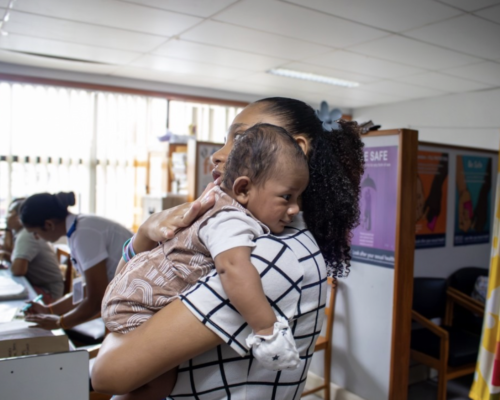
Fiji Moves First
How a Pacific vaccine innovator became the first low- or middle-income country to reduce its pneumococcal vaccine schedule from three doses to two For more than a decade, Fiji has protected its children against pneumococcal disease with three doses of pneumococcal conjugate vaccine, or PCV....
01 October, 2026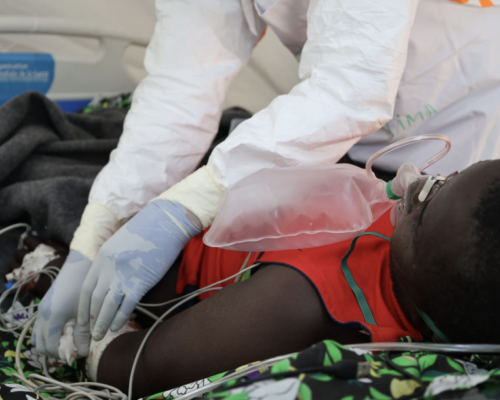
In the Ebola response, oxygen remains a lifesaving tool that is still out of reach
“To be honest we are already losing Ebola patients because we don’t have enough oxygen.” For Dr Richard Kojan, an intensive care physician with the Alliance for International Medical Action (ALIMA), some of the most painful moments of the 2026 Bundibugyo Ebola outbreak in the...
04 August, 2026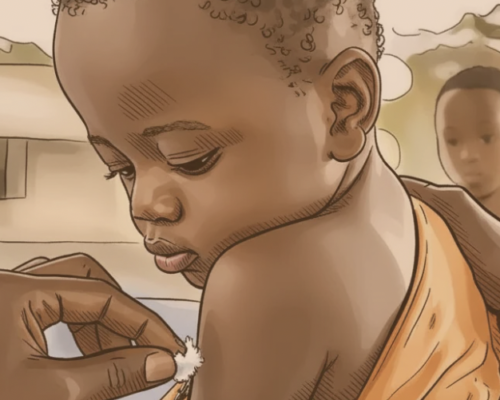
Historic Milestone: 71% of World’s Children Protected Against Pneumococcal Disease
Statement by the Secure PCV Collaborators in response to the WHO/UNICEF Estimates of National Immunization Coverage (WUENIC) More than seven in every ten infants are protected with three doses of the pneumococcal conjugate vaccine (PCV) in 2025, according to the latest vaccine coverage estimates from...
27 July, 2026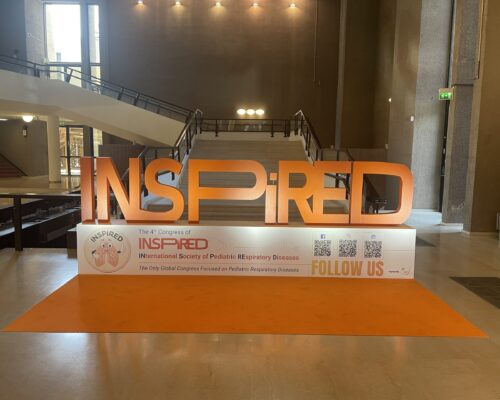
Childhood Pneumonia Takes Center Stage at INSPiRED 2026
The 4th Congress of the International Society of Pediatric Respiratory Diseases (INSPiRED), held in Bologna in June 2026, demonstrated that we have entered a new era of pneumonia control, where rapid reductions in child mortality are within reach. Across the Congress, presentations highlighted advances in...
07 July, 2026
Financing Maternal RSV Immunization Through Reduced-Dose PCV Schedules
Pneumonia remains the leading infectious cause of death among children under five, accounting for more than 600,000 deaths annually worldwide. Despite gains in vaccine coverage, progress reducing pneumonia deaths has slowed, and many countries face increasingly constrained health budgets. At the same time, new tools...
05 June, 2026
The power of civil society to support new vaccine introductions
Something extraordinary has been happening for the children of Chad, Somalia, and South Sudan. An unprecedented period of child health progress with the introduction of new vaccines against pneumonia, diarrhea, and malaria. Together, these three infections caused 86,000 deaths in 2021 – 45% of all...
22 June, 2025
