


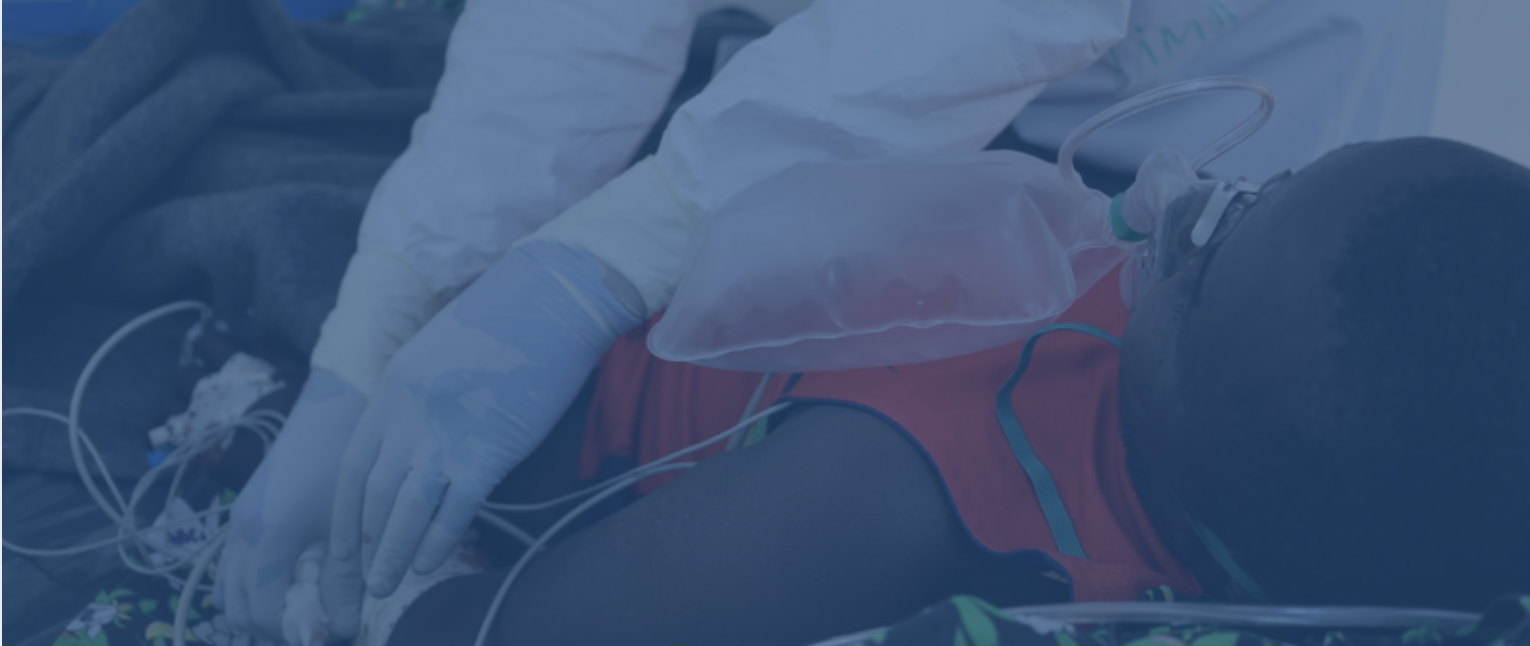
04 Aug In the Ebola response, oxygen remains a lifesaving tool that is still out of reach
“To be honest we are already losing Ebola patients because we don’t have enough oxygen.”
For Dr Richard Kojan, an intensive care physician with the Alliance for International Medical Action (ALIMA), some of the most painful moments of the 2026 Bundibugyo Ebola outbreak in the Democratic Republic of Congo are watching patients deteriorate because a basic, lifesaving treatment is not always available.
“I lost two patients from the same family — first the sister and then the brother — both in their twenties — one after the other.”
Both patients needed large amounts of oxygen to survive. But the supply available at the Ebola treatment facilities where Dr Kojan is working was not enough.
“They needed so much oxygen we had to get bottles (cylinders) delivered from Bunia Hospital — the only hospital in the area who has them because it has its own oxygen plant.”
Dr Kojan is supporting the Ebola response in Ituri Province, where ALIMA is operating four Ebola treatment facilities with capacity for approximately 200 patients. Across these facilities, around 25 Ebola patients require oxygen at any given time.
Oxygen needs are identified through pulse oximetry, a simple technology that measures the amount of oxygen in a patient’s blood. When oxygen saturation falls below 92%, the threshold recommended by the World Health Organization (WHO), oxygen therapy should be started.
According to WHO, optimized supportive care is the foundation of Ebola treatment, including close monitoring and management of complications such as low blood oxygen, also called hypoxemia.
WHO guidance highlights maintaining adequate oxygenation and providing oxygen therapy when needed, alongside other critical supportive interventions, including fluid management, treatment of shock, correction of electrolyte abnormalities, pain and fever management, and nutritional support.
But in many Ebola treatment settings, delivering oxygen in the required amounts remains a major challenge.
“We have some oxygen concentrators but they are not really powerful enough for Ebola patients who need a higher flow. We are seeing Ebola patients who need four to six large oxygen bottles (cylinders) every 24 hours,” Dr Kojan said.
The region’s oxygen supply depends heavily on Bunia Hospital, which has the only oxygen production plant in the area. The facility is able to fill some cylinders and supply ALIMA and other Ebola treatment centers, but Bunia Hospital also needs oxygen for its own patients, those with Ebola and many with other conditions.
“Getting so many cylinders delivered day after day is difficult because Bunia Hospital needs oxygen to treat its own patients – a lot of patients need oxygen not just for Ebola,” Dr Kojan said.
The Bunia Hospital oxygen plant itself faces challenges common to many health facilities in low-resource settings: high energy costs, equipment breakdowns, and ongoing maintenance needs.
The solution, Dr Kojan says, is not simply transporting more cylinders — it is building local oxygen capacity closer to where patients are treated.
“We need other hospitals in the region to have their own oxygen plants — especially Rwampara Hospital and Nizi hospitals — this would make a big difference.”
He also points to the need for more advanced respiratory support like high-flow nasal therapy which delivers high concentrations of heated, humidified oxygen that reduces the work of breathing, improves oxygenation, and may avoid the need for invasive mechanical ventilation.
“We have a few donated high-flow machines from WHO that we are training our clinicians on now, but we need more.”
In 2021, during the COVID-19 pandemic, the DRC Government launched its first National Roadmap for Scaling Up the Availability of Medical Oxygen and Pulse Oximetry (2021–2025), with a goal of increasing the proportion of health facilities with access to oxygen and pulse oximetry from 30% to 80% by 2025. The roadmap called for oxygen production capacity in all 26 DRC provinces.
While the pandemic brought unprecedented investment in DRC’s oxygen infrastructure – oxygen plants, concentrators and cylinders – much of it donated by UN agencies and the World Bank, this goal has not been met.
A 2024 assessment by NGO PATH of 340 health facilities in all 26 provinces found that although oxygen infrastructure had expanded (18 facilities had on-site oxygen plants), one in three still had no pulse oximeters, only 40% had ICU beds, cylinder availability remained limited, and shortages of flowmeters, cannulas, and other delivery equipment continued to restrict oxygen access.
The Ebola crisis is an opportunity for the DRC Ministry of Health to develop a second roadmap building on the lessons from the current outbreak and ensuring that medical oxygen is recognized as a core component of pandemic preparedness and emergency response in the next version.
Given the high risk of disease outbreaks in the country, all health facilities must have timely access to oxygen for emergencies, without compromising care for the many patients requiring it for routine care and surgery.
For Dr Kojan, the Ebola response highlights a broader lesson about global health preparedness. New vaccines and experimental treatments are essential, but they cannot replace the basic systems needed to keep critically ill patients alive.
“We can test new vaccines and explore experimental drugs, but what we really need now are the basics to care for people with Ebola, and oxygen is the basics.”
As Ebola outbreaks continue to test fragile health systems, oxygen remains one of the clearest reminders that outbreak preparedness is not only about stopping transmission. It is also about ensuring that patients who survive the virus have access to the supportive care that gives them a chance to survive and recover.
30 July 2026 interview with Dr Richard Kojan, President of ALIMA (the Alliance for International Medical Action), and intensive care physician and anesthesiologist with more than 15 years’ experience providing critical care in low-resource settings, including during Ebola outbreaks.
August 2026