


07 Jul Childhood Pneumonia Takes Center Stage at INSPiRED 2026
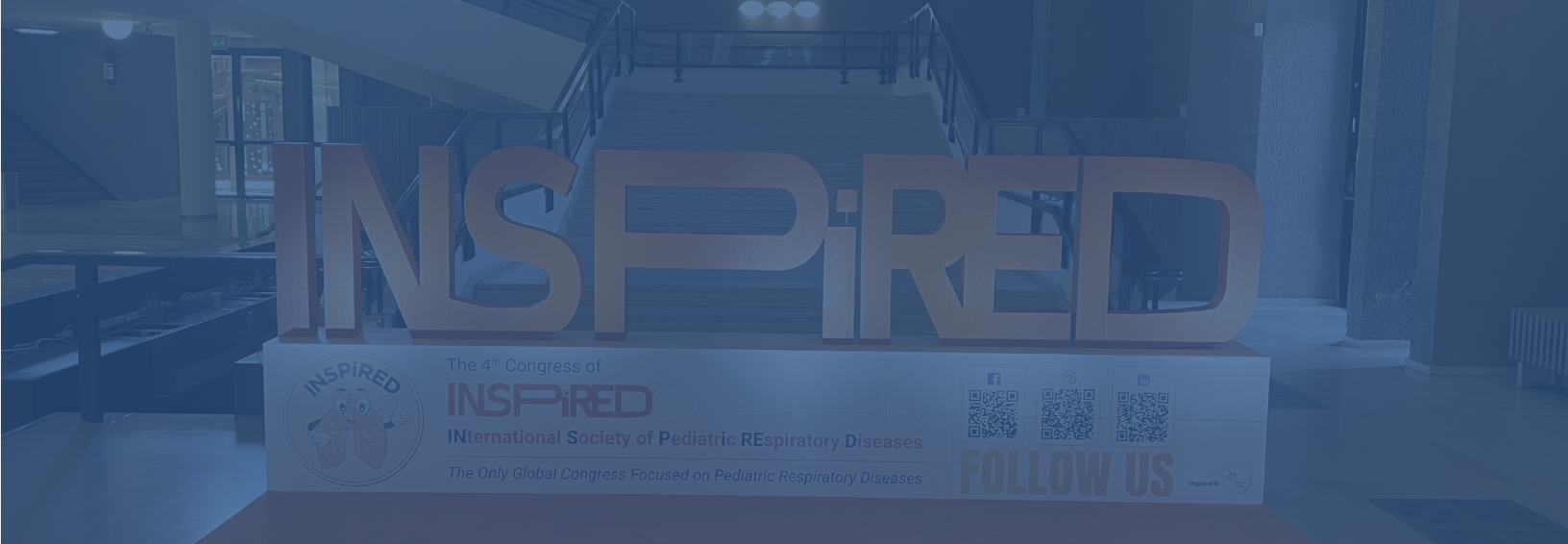
The 4th Congress of the International Society of Pediatric Respiratory Diseases (INSPiRED), held in Bologna in June 2026, demonstrated that we have entered a new era of pneumonia control, where rapid reductions in child mortality are within reach. Across the Congress, presentations highlighted advances in RSV prevention and optimized pneumococcal vaccination (PCV) schedules, improved diagnostics through artificial intelligence, lung ultrasound, and pulse oximetry, and new insights into climate’s impact on air quality, and long-term lung health. The challenge ahead is ensuring that governments and other healthcare providers translate this growing body of evidence into action by prioritizing the most lifesaving interventions and delivery strategies. Those that do, will not only accelerate achievement of child survival goals, but will reduce the rapidly rising burden of later life lung conditions.
Five calls to action emerged:
- Embrace the new era of pneumonia vaccination
- Prevent childhood pneumonia now and protect lifelong lung health
- Transform diagnosis through AI-enabled multimodal tools
- Tackle air quality as a major driver of respiratory infection
- Ensure lifesaving innovations reach the most vulnerable children
1) Embrace the new era of pneumonia vaccination
If there was one key message from INSPiRED, it was that the world has entered a new era of pneumonia control with a powerful combination of vaccines against RSV, the leading viral cause of pneumonia hospitalization, and pneumococcus, the leading bacterial cause of pneumonia death. Combining these two will not only reduce child deaths, but save healthcare costs. Indeed evidence was presented that the two interventions together can be cost saving! Countries with high PCV coverage can further reduce costs by transitioning from a three-dose to a two-dose schedule with the savings helping to finance the introduction of new vaccines like RSV.
Standout presentations:
Gates Foundation Symposium: New Advances in Pneumonia Prevention
- Global Burden, Aetiology, and Severity of Childhood Pneumonia in 2026, Gail Rodgers (Gates Foundation, USA)
- New Challenges for Pneumococcal Conjugate Vaccines – Reduced Schedules and Expanded Valencies, Shamez Ladhani (UN Health Security Agency, United Kingdom)
- Access and Affordability of New Vaccines, Ignacio Esteban (Gavi, Switzerland)
RSV MAT Medical Symposium: Lessons from Implementation of RSVpreF Maternal Vaccination Across Multiple Seasons (Pfizer-sponsored)
- RSV Maternal Vaccination: Bridging Clinical Trials to Real‑world Data, Heather Zar (University of Cape Town, South Africa)
- Implementation Best Practices Through Multiple RSV Seasons, Mauricio Caballero (Fundación INFANT, Argentina)
2) Prevent childhood pneumonia now and protect lifelong lung health
Several sessions highlighted growing evidence that childhood pneumonia can alter lung development and increase the risk of chronic respiratory disease later in life, including recurrent wheezing, asthma, bronchiectasis, and other conditions. These findings reinforce the importance of preventing pneumonia in the first months and years of life through immunization and other interventions (e.g.clean air), while ensuring that children who experience severe pneumonia receive appropriate follow-up. This also highlights the need for integrated lung health policies and programs that bridge infectious and chronic respiratory disease management.
Standout presentations:
- The Role of Early Viral Infections in the Development of Childhood Asthma: Insights from Rhinovirus and RSV Research, by Wojciech Feleszko (Medical University of Warsaw, Poland)
- Lung Function Trajectories and Earlylife Determinants of Chronic Lung Diseases, Luca Bonadies (University of Padua, Italy)
- Following the Preterm Lung: Long-Term Outcomes and Emerging Challenges, Elianne Vrijlandt (University of Groningen, the Netherlands)
- Childhood Lung Function Trajectories: Implementation at Clinical and Population Level, Sejal Saglani (Imperial College London, UK)
- Recurrent Wheezing After RSV-LRTI in Argentina: A Six-Year Cohort Study in Vulnerable Infants, Pilar Sorgente (National University of General San Martín, Argentina)
3) Transform diagnosis through AI-enabled multimodal tools
The congress highlighted a clear transformation in pneumonia diagnosis. Where assessment was once dominated by clinical signs and chest X-rays, there is now a decisive shift toward integrated, technology-enabled approaches that combine pulse oximetry, AI-assisted lung ultrasound, AI interpretation of chest radiographs, and structured digital lung sound analysis from auscultation data. The underlying goal is to reduce inter-observer variability, extend reliable diagnostic capacity beyond specialist clinicians, and enable earlier triage in low-resource settings. Taken together, these developments point toward a future in which pneumonia diagnosis is no longer purely clinical, but increasingly computational, scalable, and supported by “expert systems” designed for frontline use.
Standout presentations:
- Severe Pneumonia: Defining Hypoxemia and Optimal Interventions, Eric McCollum (Johns Hopkins University, USA/Stellenbosch University, South Africa)
- Empowering Clinicians With AI-Guided Lung Ultrasound: Replacing or Supplementing the Stethoscope? Giovanni Volpicelli (University of Turin, Italy)
- AI-Assisted Diagnosis in Pneumonia: CXR, Lung Ultrasound and More, Bruno Hochhegger (University of Florida, USA/Pontifical Catholic University of Rio Grande do Sul, Brazil)
- Developing Artificial-Intelligence Lung Sound Algorithm Using Pulmonary Physician Expert Analysis to Improve Pediatric Pneumonia Diagnostic Accuracy in Low- and Middle-Income Countries, Sunaina Kapoor (John Hopkins University, USA)
4) Tackle air quality as a major driver of respiratory infection
Air quality emerged as an increasingly important dimension of childhood pneumonia prevention at INSPiRED with climate change a threat . Presentations highlighted the powerful influence of environmental exposures on children’s respiratory health with climate change, driving air pollution, extreme weather events, thunderstorms , wildfires, dust storms, and indoor air contaminants can increase the risk and severity of pneumonias. These discussions emphasized stronger policies on clean air, climate mitigation, urban planning, and healthier living environments. The message was clear: environmental protection is becoming an essential component of child lung health, and climate policy and child health policy are increasingly inseparable.
Standout presentations
- Climate Change and Air Pollution: A Threat to Respiratory Health in Children, Terry Noah (University of North Carolina, USA)
- Air Quality and Acute Respiratory Risk in Infants, Daniele Zama (University of Bologna, Italy)
- Climate Change and Thunderstorm Asthma in Children: Challenges and Responses, Kunling Shen (Capital Medical University, China)
- Immune Health, Biodiversity & Respiratory Disease, Manuel E. Soto-Martínez (University of Costa Rica)
- Early-Life Environmental Exposures and Chronic Lung Disease Risk, Andrew Bush (Imperial College London, UK)
5) Ensure lifesaving innovations reach the most vulnerable children
The greatest barrier to reducing childhood pneumonia deaths is no longer a lack of effective tools, but unequal access to them, with the children at greatest risk of death the least likely to receive vaccines, timely diagnosis, and quality clinical care. A consistent message throughout the meeting was that identifying these highest-risk children must become a priority. New risk stratification tools, including a rapid test are making it increasingly possible to identify children most likely to deteriorate or die—particularly those living in humanitarian settings or affected by malnutrition, chronic illness, or other vulnerabilities—so that limited resources can be directed to those who need them most. Across sessions, speakers emphasized that even the most effective innovations, from PCV and RSV vaccines to pulse oximetry and oxygen therapy, will only save lives if they reach the children at highest risk.
Standout presentations
- Global Lung Health – Where are we now and where are we going, Heather Zar (University of Cape Town, South Africa)
- Biomarkers for Risk Stratifying Pneumonia and Improving its Management, Quique Bassat (ISGlobal, Spain)
- Migration and the Pediatric Lung: Respiratory Health in Child Refugees, Peter Le Souëf (University of Western Australia)
Here is a stronger version that makes LMIC leadership—not just participation—the central message:
A defining feature of INSPiRED was the central role given to researchers and perspectives from LMICs in Africa, Asia, and Latin America. Their contributions highlighted practical innovations and locally-generated evidence on strengthening vaccination programmes, improving diagnosis, expanding access to oxygen, and building better health systems. The participation of 60 young investigators from LMICs, supported through the Gates Foundation, further demonstrated INSPiRED’s commitment to developing the next generation of global child lung health leaders. By placing the experience and expertise of countries carrying the greatest pneumonia burden at the centre of the scientific agenda, INSPiRED reinforced that the future of pneumonia control must be shaped by those closest to the challenge.
Relevant Poster Presentations
- A Case of Necrotizing Pneumonia with Empyema Thoracis in a 4-Year Old Female with Tracheal Bronchus, Marie Abigail Lim (Philippine General Hospital)
- A Machine Learning Prediction Model for Severe Adenovirus Pneumonia in Children: Explainability with SHAP, Xiaoyin Niu (Children’s Hospital, Tianjin University)
- Aetiology of Childhood Pneumonia in LMICs in the Era of Vaccination: A Systematic Review, Joel Musyoki (Kenya Methodist University)
- Clinical Profile and Outcomes of Childhood Pneumonia Admissions in a Teaching Hospital in Ghana, Carolyn Adabo Sackey (Komfo Anokye Teaching Hospital, Ghana)
- Effect of Prophylactic Inhaled Amikacin on Ventilator-Associated Pneumonia and Clinical Outcomes in Mechanically Ventilated Children: A Randomised Controlled Trial, (Neethu Ravi, All India Institute of Medical Sciences, Rishikesh)
- Impact of Value Driven Care (VDC) Initiatives on Clinical Quality Indicators in Children Admitted with Community Acquired Pneumonia (CAP), Sanjna Nilesh Nerurkar (KK Women’s and Children’s Hospital, Singapore)
- Post-Pandemic Surge of Pediatric Mycoplasma Pneumonia: A Single-Center Retrospective Study, Ewelina Wawryk-Gawda, Medical University in Lublin
- Recovering Pneumonia With Sudden Deterioration…What Could Be Behind It?, Dimitrinka Miteva (Umhat Alexandrovska, Bulgaria)
- Recurrent Pneumonia in Early Childhood: A Case Report, Cristian Phillip Marinau (Bihor County Emergency Clinical Hospital, Romania)
- Risk Factors for Post-Infectious Bronchioloitis Obliterans in Children with Ademoviral Pneumonia: A Six-Year Retrospective SIngle-Center Study in Southern Vietnam, Dung Nguyen (University of Medicine and Pharmacy, Viet Nam)
- Severe Necrotizing Pneumonia Complicated by Lung Abscess and Empyema in a Young Child; A Prolonged and Multidisciplinary Therapeutic Challenge, Cristian Lucaci (SCUC Grogore Alexandresscu, Bulgaria)
- The Prevalence and Risk Factors Associated with Pneumonia in Indian Children (0-4 Years) with Productive Cough, Ajay Kumar Verma (John Snow, India)
July 2026